


You know that feeling when a game starts casual but suddenly every play becomes a nail-biting moment? That’s exactly what the Chicago Bears vs 49ers Match Player Stats delivered. To be honest, this wasn’t just a regular NFL game; it was an exhibition of strategy, skill, and raw determination that had fans leaning forward in their seats, eyes glued to the screen.
We’ve all been there — gripping our snacks, waiting to see whether a risky throw connects or a crucial tackle stops a drive. And while final scores tell part of the story, the player stats reveal so much more — how each player contributed, how momentum shifted, and which performances defined the game.
Chicago, known for grit, discipline, and methodical execution, approached the game with calculated patience. Meanwhile, the 49ers, with their high-powered offense and aggressive line play, brought energy and unpredictability. And when these two styles collided, it wasn’t just about points; it was about who could control tempo, dominate key matchups, and execute under pressure.
Quarterback Performances — The Engines of Offense
Quarterbacks are the heartbeat of any NFL team, Chicago Bears vs 49ers Match Player Stats and this game was no exception. Both signal-callers were tested in ways that showcased skill, adaptability, and mental toughness.
Chicago Bears Quarterback — Composure and Precision
The Bears’ quarterback demonstrated remarkable poise throughout the game. His stat line included a solid completion percentage, several touchdown passes, and minimal turnovers. But to be honest, what stood out most wasn’t the numbers — it was his ability to manage high-pressure moments, particularly on third downs and in the red zone.
Watching him navigate the pocket, avoid sacks, and make subtle adjustments to his throws showed an understanding that experience and decision-making often outweigh raw athletic ability. And fans noticed — each completed pass seemed to breathe life into the Bears’ offense, keeping drives alive when a single mistake could have been costly.
49ers Quarterback — Aggressive and Creative
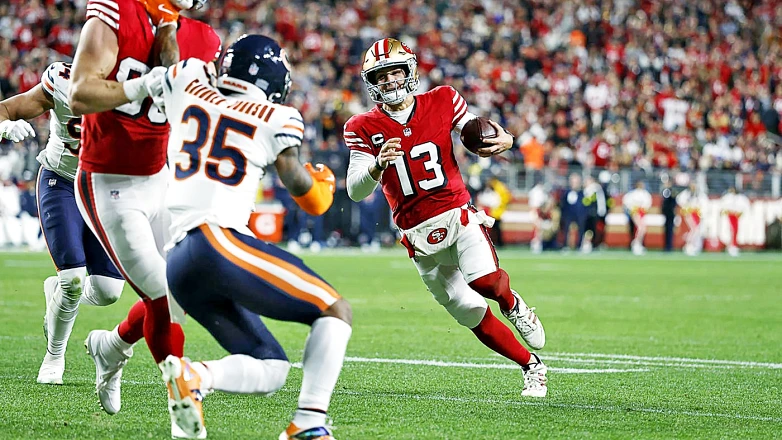
The 49ers quarterback approached the game with aggression and boldness. He wasn’t afraid to attempt high-risk throws, which sometimes led to incomplete passes or turnovers, but also produced explosive gains and game-changing moments. His scrambles, deep throws, and ability to improvise under pressure reflected a player capable of thinking on his feet while keeping the team moving forward.
What’s interesting is that, while his completion percentage might have appeared slightly lower than the Bears’ quarterback, the impact of each successful play often shifted momentum and energized both the stadium and his teammates. Numbers are helpful, but context is everything.
Running Back Contributions — Grinding and Exploding
Running backs determine the tempo of a game, and this matchup highlighted contrasting approaches.
Bears Running Backs — Controlled Consistency
Chicago’s running backs relied on patience and smart decision-making. They consistently gained key yards, converted third downs, and allowed the quarterback to operate in rhythm. Their stats showed moderate yardage per carry, minimal lost yards, and critical red-zone conversions.
And here’s why this matters: controlling the clock and wearing down a defense is as strategic as explosive scoring plays. Each 3- or 4-yard gain added cumulative pressure on the 49ers defense, creating opportunities for play-action passes and high-percentage throws.
49ers Running Backs — Explosive Game-Changers
The 49ers took a more aggressive approach. Their running backs sought big-play opportunities, utilizing speed, vision, and physicality to break long runs. Chicago Bears vs 49ers Match Player Stats While this high-risk strategy sometimes led to tackles for loss, it also resulted in momentum-shifting plays that could energize the crowd and dictate team confidence.
So while the Bears focused on consistency and control, the 49ers relied on risk and reward, showing two very different philosophies in action.
Wide Receiver Showcases — Technique Versus Physicality
Receivers can completely change the outcome of a game. In this matchup, both teams had standout performances.
Bears Wide Receivers — Precision and Route Mastery
Chicago’s receivers excelled in route running and timing. They consistently created separation, converted key third downs, and gained valuable yards after the catch (YAC). Chicago Bears vs 49ers Match Player Stats Their stats, while solid, don’t fully capture the intelligence behind each play. Watching them was like seeing a well-rehearsed choreography, where each cut, acceleration, and adjustment was calculated to perfection.
These precise skills allowed the quarterback to operate effectively and sustain long drives, turning potential short plays into first downs and scoring opportunities.
49ers Wide Receivers — Physicality and Contested Catches
The 49ers receivers, on the other hand, thrived on physicality and contested grabs. Chicago Bears vs 49ers Match Player Stats They secured difficult receptions, fought through tight coverage, and converted short opportunities into significant yardage. Even when stats seemed modest, the emotional and strategic impact of each reception was immense, often flipping momentum in critical moments.
Fans often overlook this, but contested catches are high-pressure plays that require strength, concentration, and courage, which the 49ers executed brilliantly.
Defensive Performances — Pressure, Tackles, and Turnovers
Defense isn’t just about stopping points; it’s about controlling the game flow.
Bears Defense — Discipline and Smart Play
Chicago’s defense showcased disciplined gap control, consistent tackling, and timely interceptions. Tackles for loss and QB pressures reflected a unit focused on strategy as much as physicality. Chicago Bears vs 49ers Match Player Stats And watching the defensive backs limit explosive passing plays highlighted how intelligence and anticipation contribute to the numbers you see in stats.
49ers Defense — Aggression and Opportunism
The 49ers defense brought aggression and sometimes chaos. Sacks, pressures, and forced fumbles shifted momentum. Even when gaps appeared, the defense adapted quickly, showcasing versatility and resilience. While some statistics might suggest volatility, the impact of key defensive plays often outweighed raw numbers, emphasizing the importance of context in player stats.
Special Teams — Small Plays, Big Impacts
Kickoffs, punts, and field goals often fly under the radar but can define close games. In this matchup:
- Bears: Solid coverage limited 49ers returns and maintained favorable field position.
- 49ers: Explosive returns created scoring opportunities and energized both team and fans.
Stats like return yards, blocked kicks, and field goal percentage illustrate how special teams influence scoring, momentum, and field control, even if they aren’t always the highlight of post-game discussions.
Turnovers — How Mistakes Shaped the Game
Turnovers are often game-defining. Interceptions and fumbles didn’t just affect the scoreboard — they shifted momentum and forced strategic adjustments. Chicago minimized mistakes with careful ball control, while the Chicago Bears vs 49ers Match Player Stats aggressive plays created risk-reward scenarios. The takeaway is simple: stats tell a story, but the emotional ripple effect of turnovers shapes fan experience and team confidence.
Coaching and Strategy — Stats in Context
Coaching decisions heavily influence how stats are generated. Timeout usage, fourth-down attempts, and defensive alignments directly affected player performance.
- Bears: Focused on risk management, emphasizing ball control and calculated drives.
- 49ers: Opted for aggression, challenging the Bears’ defensive discipline and creating opportunities for explosive plays.
And here’s the insight: player stats are not just individual achievements — they reflect coaching philosophy, preparation, and situational decision-making, which can be as crucial as the raw numbers themselves.
Key Plays and Momentum Shifts
Some plays stood out in this matchup:
- Red-Zone Conversions: Chicago’s methodical efficiency vs 49ers’ big-play approach.
- Third-Down Execution: Critical drives that decided possession.
- Big Rushes and Receptions: High-impact plays that shifted momentum and energized the stadium.
- Turnovers: Strategic mistakes and forced errors that created pivotal changes in field position.
These moments illustrate that stats are alive — they capture both tangible and intangible contributions.
Historical Context — Comparing Past Matchups
Looking at previous Bears vs 49ers games:
- Bears have historically emphasized discipline, strong defense, and controlled passing games.
- 49ers have focused on explosiveness, creative play-calling, and aggressive defense.
This game adhered to those trends but also highlighted emerging talent, showing how individual player stats reflect larger team evolution.
Fan and Emotional Impact — Stats as Stories
Beyond numbers, the game had major emotional resonance:
- Bears fans celebrated consistent drives and disciplined execution.
- 49ers fans experienced exhilarating highs from deep throws and breakaway runs.
- Every stat, from a short gain to a forced fumble, carried emotional weight, shaping the fan experience and collective memory of the game.
Conclusion — Stats Tell the Story, But Emotion Defines the Game
The Chicago Bears vs 49ers matchup was more than points on a board. It was a story of strategy, resilience, and individual brilliance reflected in player stats, momentum shifts, and emotional highs. Fans, analysts, and fantasy players alike can learn a lot by examining the numbers — but the real takeaway is this: football is as much about heart, timing, and courage as it is about statistics.
So next time you analyze a game, remember — stats are tools, but emotion, execution, and context define the story.
FAQs — Chicago Bears vs 49ers Match Stats
Q1: Who led the game in passing yards?
A1: The Bears’ quarterback led in consistent passing, completing key third downs and red-zone attempts.
Q2: Which running back had the most impact?
A2: The 49ers’ RBs created explosive plays that shifted momentum, while Bears’ RBs maintained control and clock management.
Q3: How did turnovers influence the game?
A3: Turnovers shaped momentum, forced strategic adjustments, and impacted scoring opportunities for both teams.
Q4: Which wide receivers stood out?
A4: Bears’ receivers excelled in precision routes and timing; 49ers’ receivers showcased contested catches and physicality.